AI as Your Learning Partner: My Session at NPR College
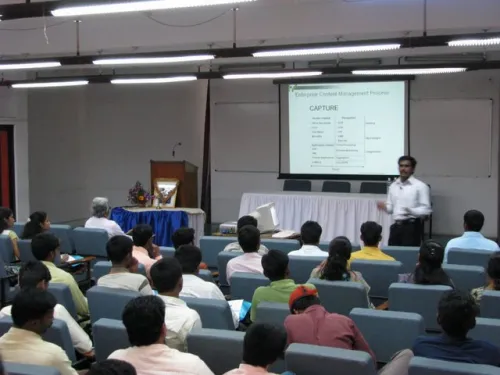
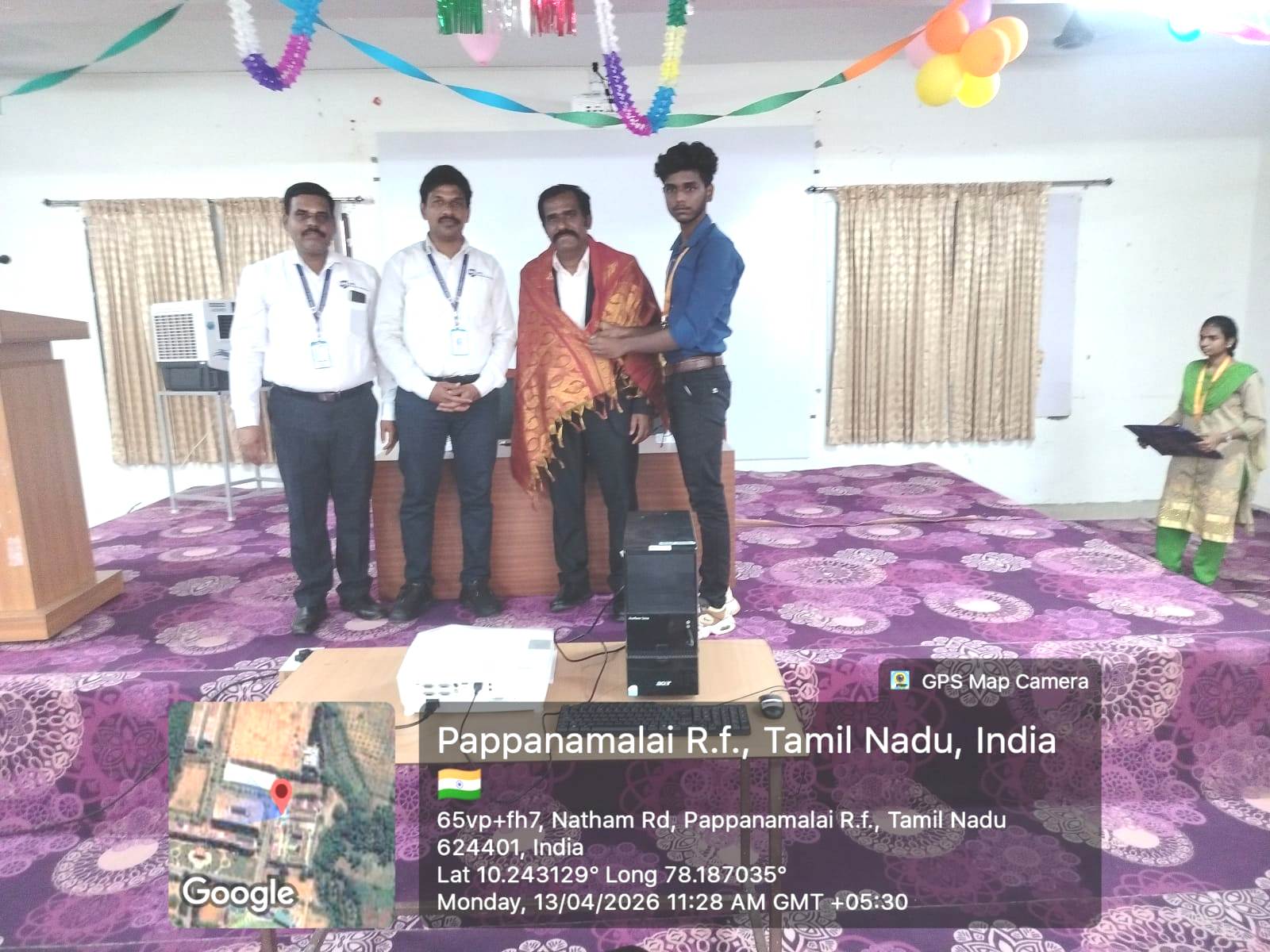
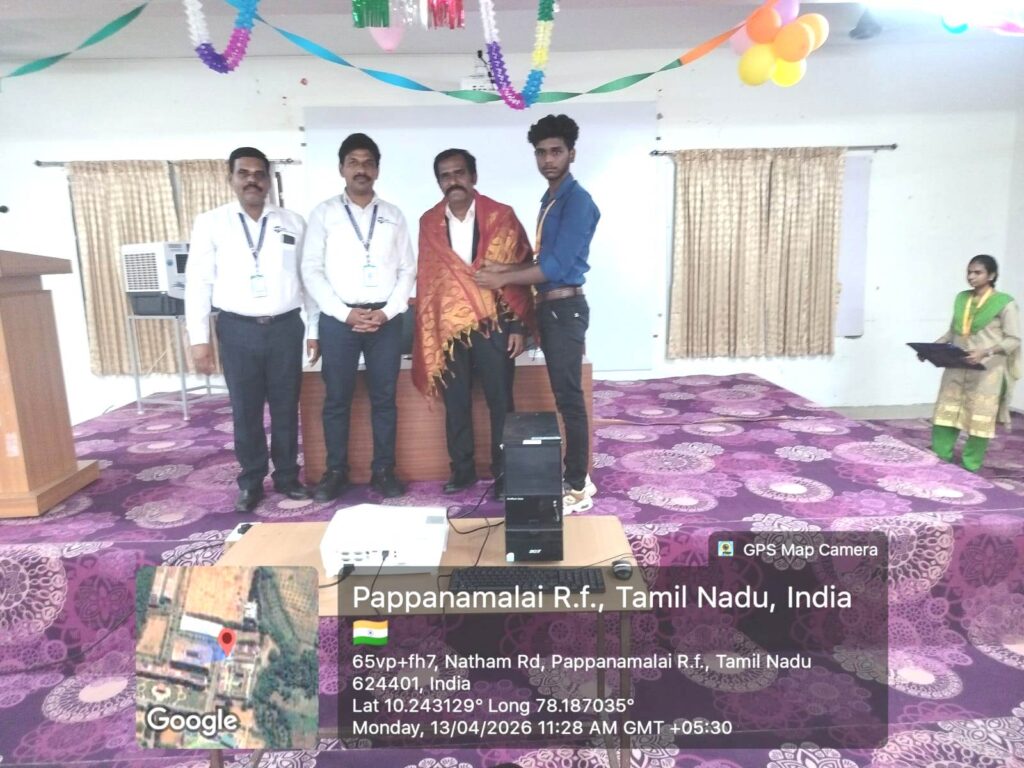
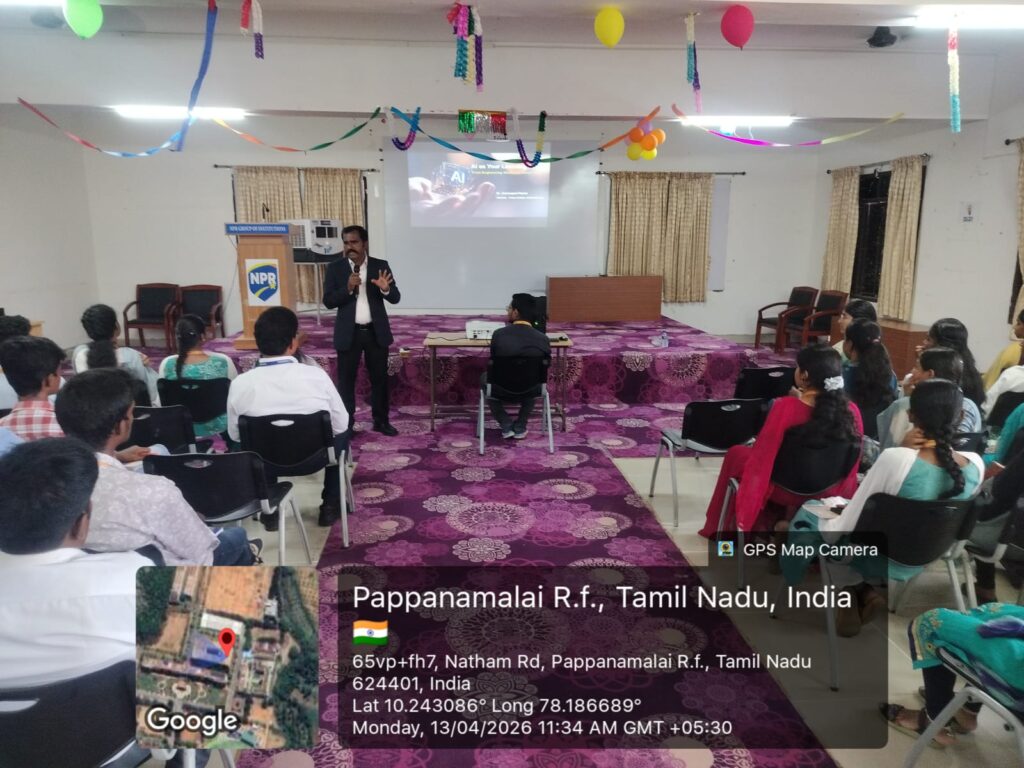
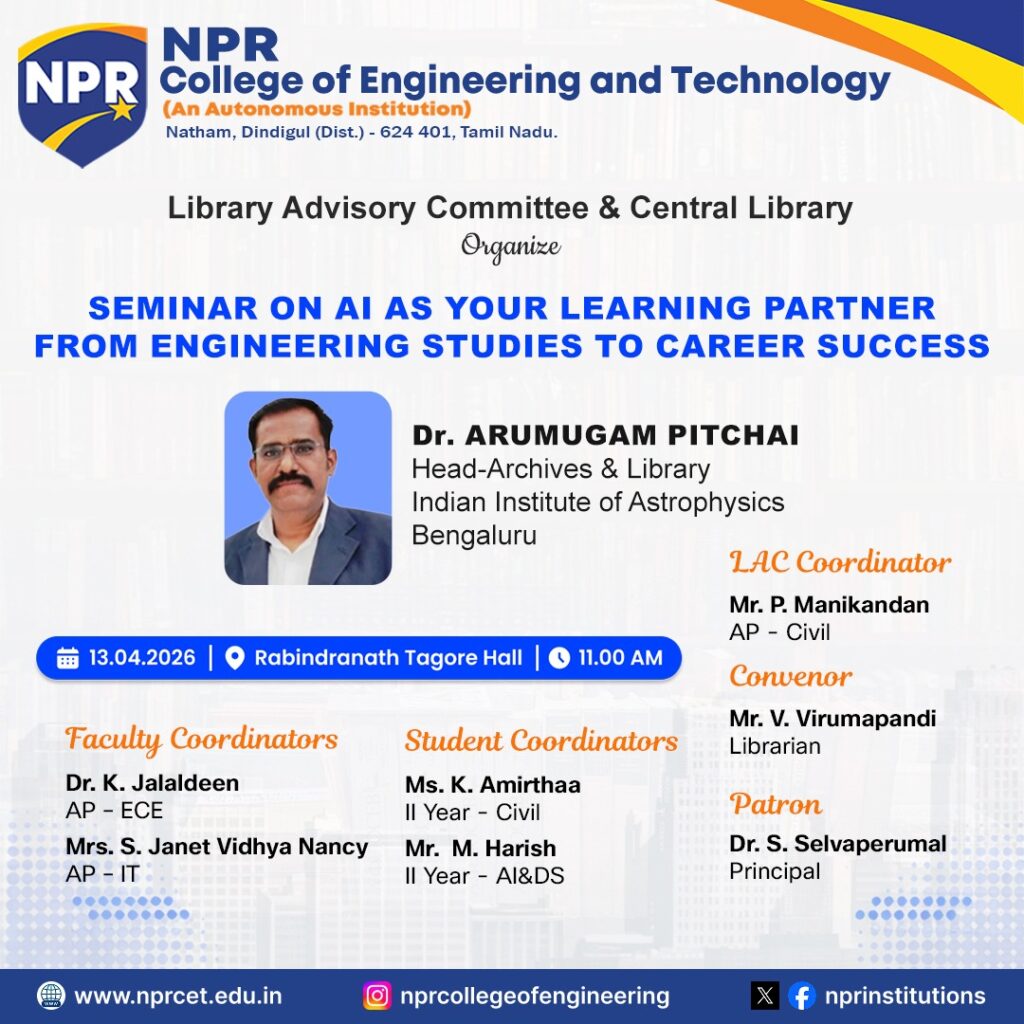
On 13th April 2026, I had the opportunity to serve as a resource person for a seminar titled “AI as Your Learning Partner: From Engineering Studies to Career Success” at NPR College of Engineering and Technology, Dindigul. The session, organized by the Library Advisory Committee and Central Library, aimed to introduce students to the practical and responsible use of Artificial Intelligence in their academic and professional journeys.
In today’s rapidly evolving educational landscape, AI is becoming an essential learning companion. During the session, I emphasized that AI is not here to replace human intelligence but to enhance it. As I highlighted, “AI won’t replace humans, but humans who use AI will replace those who don’t.” However, in many educational institutions, the use of AI is often viewed as a form of cheating. To address this concern, I discussed various AI usage policy frameworks adopted by international institutions, highlighting how they distinguish between misuse and responsible use. The focus was on encouraging students to adopt AI as a tool for improving understanding, productivity, and innovation while adhering to ethical and academic standards.
A key highlight of the seminar was the exploration of AI tools. I explored around 65 AI tools before the session and demonstrated 27 selected tools in detail during the presentations. These tools were carefully chosen to address real student needs, covering areas such as learning support, research and academic writing, career development, and engineering-related applications including coding, data analysis, and problem-solving. The objective was to help students identify the right tools for the right purpose and use them effectively.
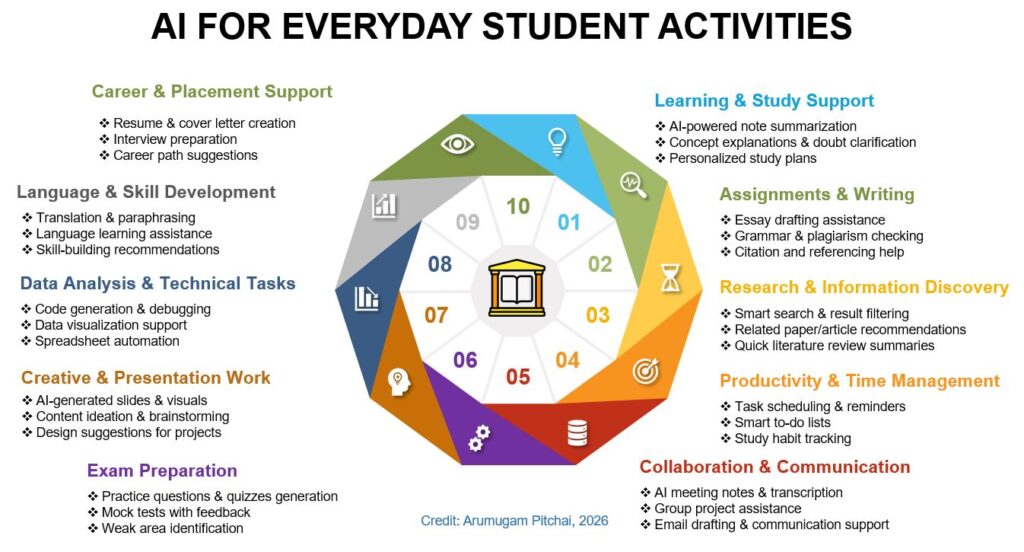
The session also explored how AI can support students in multiple dimensions. From simplifying complex concepts and assisting in assignments to enhancing research capabilities and improving productivity, AI offers significant advantages. It can also support career readiness through resume building and interview preparation, while aiding in communication, creativity, and technical tasks.
Equally important was the discussion on the responsible and ethical use of AI. I stressed that students should use AI for learning and not as a substitute for their own work. Transparency in declaring AI usage, proper citation of AI-generated content, adherence to academic integrity, and following institutional guidelines are essential practices. I also highlighted the importance of protecting personal and research data while using AI tools.
The session was highly interactive, with students actively engaging in discussions about practical AI tools, ethical concerns, and their role in future careers. Their enthusiasm reflected a growing awareness and readiness to embrace AI in a meaningful way. Students were from all engineering decipline.
Overall, the seminar was a valuable experience, reinforcing the idea that AI, when used wisely and responsibly, can become a powerful learning partner. It was encouraging to see students eager to explore new technologies while maintaining a strong foundation of ethics and critical thinking.
I sincerely thank the Principal, Dr. S. Selvaperumal, the Convener, Mr. V. Virumapandi, the LAC Coordinator, Mr. P. Manikandan, and all others involved for organizing this meaningful seminar and for their excellent support in facilitating the program. I also extend my gratitude to the faculty members and students for their active participation and engagement, which made the session both enriching and successful.