Emerging Technologies: AI in Libraries – Reflections from a National Conference
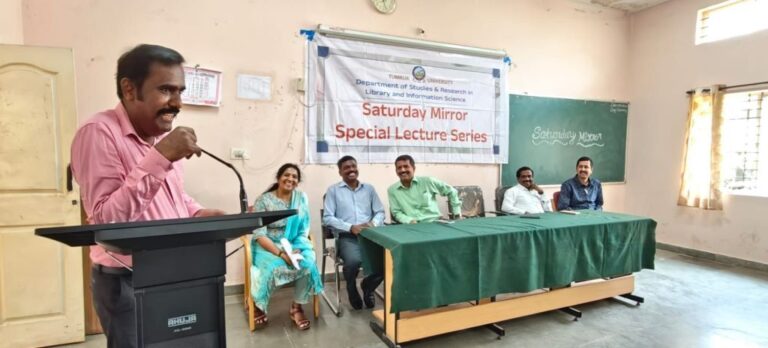
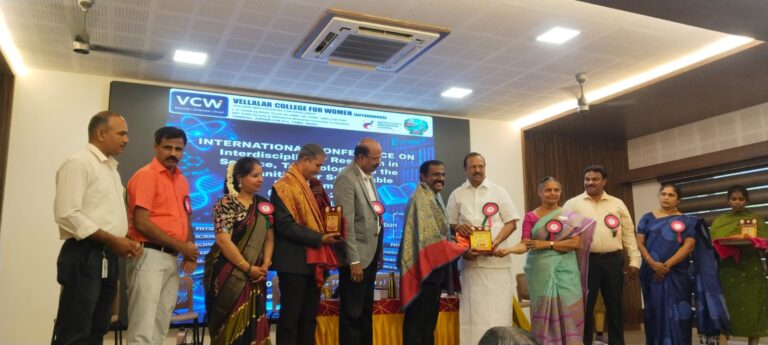
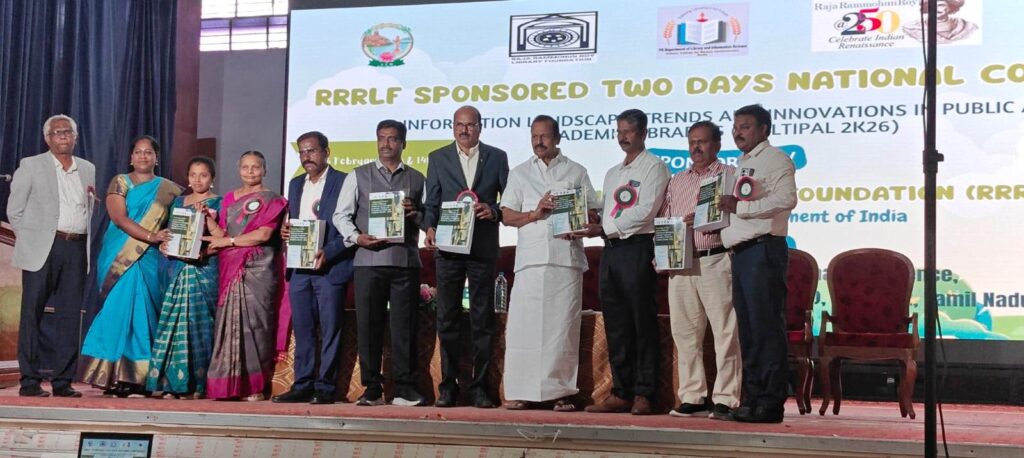
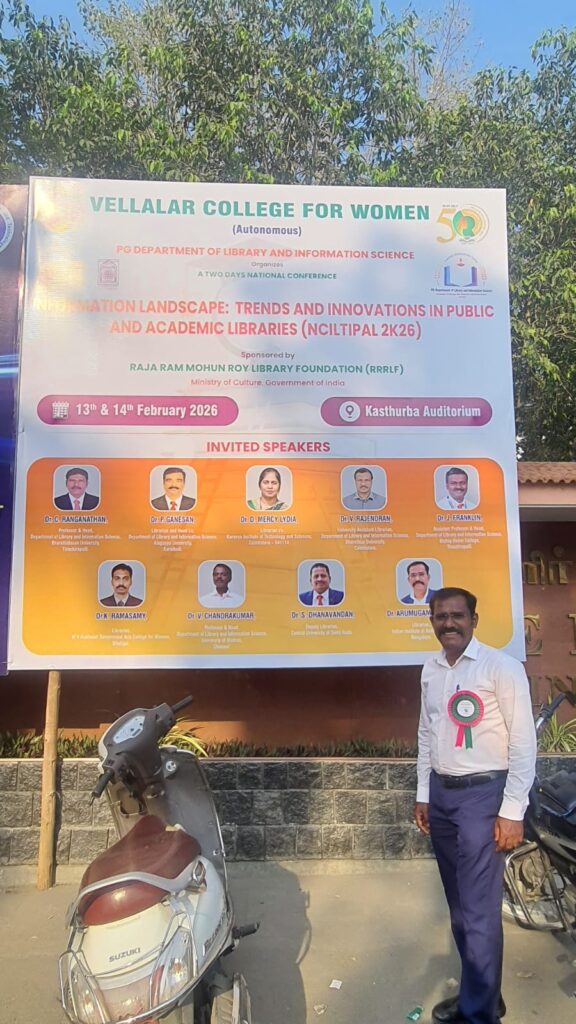
On February 13–14, 2026, I had the privilege of delivering an invited talk on “Emerging Technologies: AI in Libraries” at the National Conference on Information Landscape: Trends and Innovations in Public and Academic Libraries, hosted by Vellalar College for Women. The conference brought together academicians, librarians, and information professionals from across India to reflect on the evolving landscape of public and academic libraries. The energy throughout the two days was inspiring—there was a shared recognition that libraries are entering a transformative phase driven by intelligent technologies.

Libraries in the Age of Artificial Intelligence
In my session, I explored how Artificial Intelligence is no longer a distant concept but a practical tool that can meaningfully enhance library operations. I began by discussing the foundations of AI—machine learning, natural language processing, automation, and data analytics—and how these technologies align naturally with core library functions. From cataloguing and metadata creation to discovery systems and research support, AI tools are helping streamline workflows and improve service delivery. We examined how generative AI can assist in drafting bibliographic records, suggesting subject headings, summarizing scholarly content, and even supporting literature reviews. Rather than replacing librarians, these systems act as collaborative assistants—freeing professionals from repetitive tasks and allowing them to focus on higher-level intellectual work. We also discussed intelligent discovery systems, recommendation engines, and AI-driven chatbots that provide round-the-clock reference support. Robotics and interactive AI systems were highlighted as emerging tools for user engagement, especially in academic environments where technology adoption is accelerating.
AI in Digital Libraries and Institutional Repositories
Another important dimension of the discussion focused on digital libraries and institutional repositories. AI applications in these spaces include metadata enrichment, plagiarism detection, citation analysis, semantic search, content summarization, and multilingual translation. Such capabilities significantly enhance discoverability and research impact. However, their effectiveness depends heavily on structured, high-quality data—reinforcing the continued importance of librarians’ expertise in data curation and governance.
Considerations for Implementing AI in Libraries
While the opportunities are exciting, responsible implementation is essential. I emphasized several critical considerations:
AI adoption must align with institutional strategy rather than follow trends.
Data governance and metadata quality remain foundational.
Ethical concerns—including bias, transparency, and user privacy—must be addressed proactively.
Professional development and AI literacy are crucial for librarians to remain central in technology-driven environments.
Infrastructure and financial planning should support sustainable integration.
Claude COWORK and AI-Integrated Library Workflows
A key segment of my talk examined collaborative AI systems such as Claude COWORK, developed by Anthropic. I used this example to illustrate how generative AI copilots can integrate into library workflows.
In an AI-integrated model, the workflow begins with a user query or librarian input. The AI system interprets context, retrieves relevant metadata, generates structured outputs, and provides recommendations. Crucially, human validation remains part of the process, creating a feedback loop that ensures quality control and ethical oversight.
We explored practical use cases for AI copilots in libraries:
Drafting catalogue descriptions
Suggesting subject headings and classifications
Summarizing research articles
Assisting systematic reviews
Preparing research guides
Enhancing institutional repository metadata
Drafting policy documents and training materials
Supporting multilingual communication
These examples demonstrated how AI can function as a professional coworker—supporting, not substituting, expertise.
Gratitude
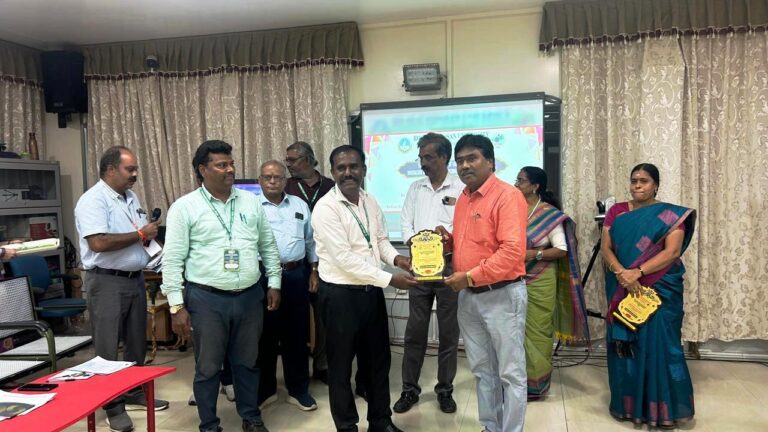
I extend my sincere thanks to Dr. B. Mahadevan and the organizing committee for the opportunity to share insights and participate in meaningful dialogue. The conference was thoughtfully organized and intellectually stimulating.
As libraries continue to evolve, it is clear that Artificial Intelligence will play an increasingly significant role. The challenge before us is not whether to adopt AI—but how to implement it responsibly, ethically, and strategically.
I look forward to continued collaborations in building intelligent, human-centered, and future-ready library ecosystems.