Social Media as a Catalyst for Community Engagement in Public Libraries
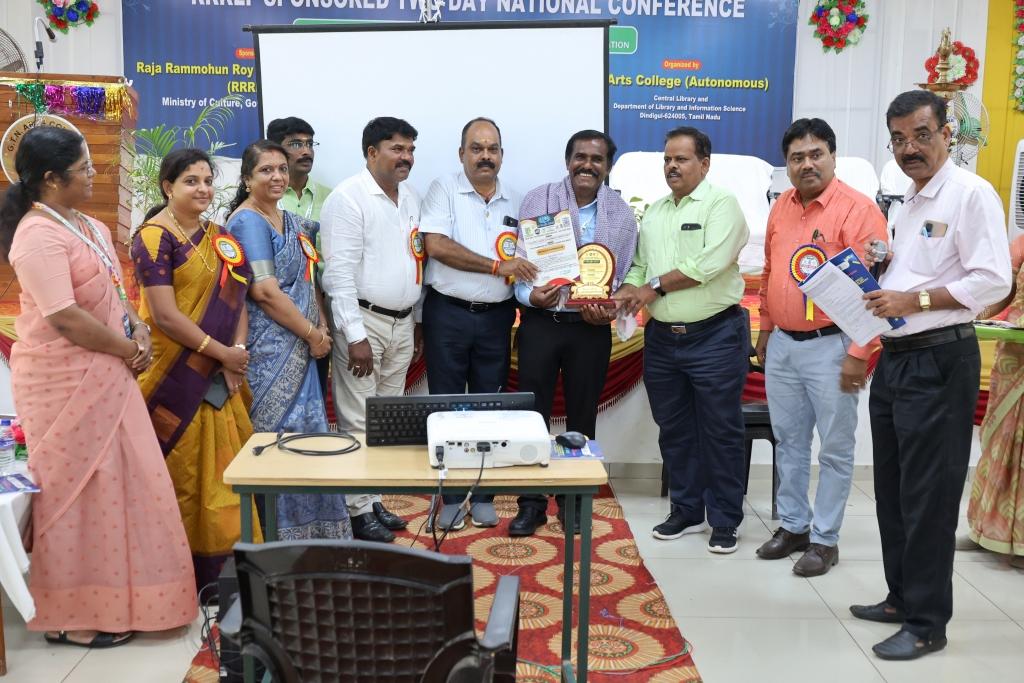
At the National Conference “Driving Community Empowerment: Advancing Sustainable Public and Academic Libraries Through Technology and Collaboration” (GTNLIB 2025) held on 07–08 November 2025 at G.T.N. Arts College, I had the privilege of sharing my thoughts on how social media can function as a catalyst for community engagement in public libraries. In an era where much of public interaction happens online, libraries must extend their presence beyond physical walls and become active participants in digital spaces. Social media is no longer optional—it is integral to visibility, relevance, and community connection.
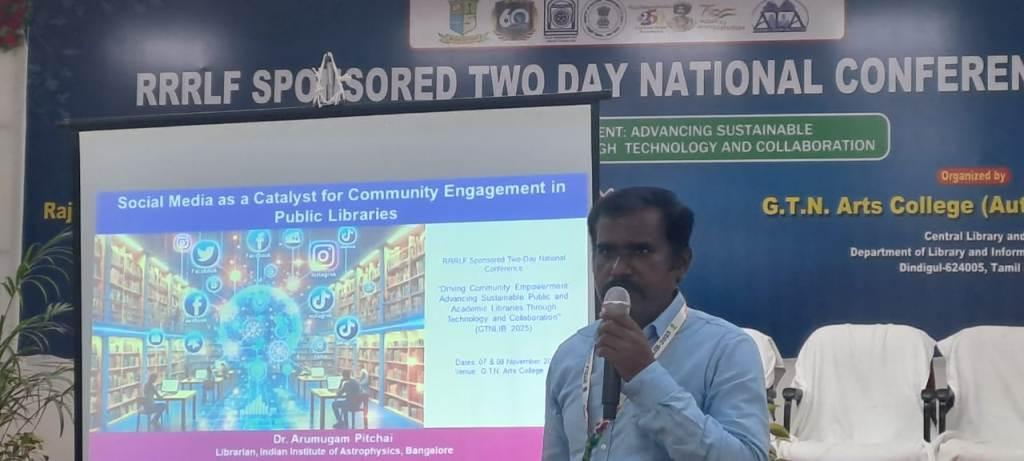
Platforms such as Facebook, Instagram, YouTube, and X allow libraries to communicate in real time, promote services and events, showcase collections, and engage with users across age groups. The key, however, lies in strategic selection—understanding where the community is most active and tailoring content accordingly. A rural library may benefit from strong Facebook engagement, while a youth-focused urban library might thrive on Instagram reels or YouTube tutorials.
Creating meaningful engagement requires moving beyond routine announcements. Storytelling about new arrivals, highlighting community members, sharing digital literacy tips, conducting reading challenges, live-streaming events, and posting behind-the-scenes glimpses of library activities can transform passive followers into active participants. Consistency, authenticity, and responsiveness are essential to building trust and sustaining interaction.
Equally important is measuring impact. Tracking reach, engagement rates, follower growth, and participation outcomes helps libraries refine their strategies and make data-informed decisions. When supported by a dedicated team, a content calendar, and clear communication guidelines, social media becomes an extension of the library’s core mission—promoting knowledge, inclusivity, and lifelong learning.
Ultimately, social media empowers public libraries to amplify their voice, strengthen community relationships, and remain relevant in a rapidly evolving digital society. It transforms libraries from silent repositories of information into vibrant, interactive platforms for connection and collaboration.