Empowering Archives through Digital Collaboration: Reflections from the “Archives in Action” Stakeholders’ Meeting
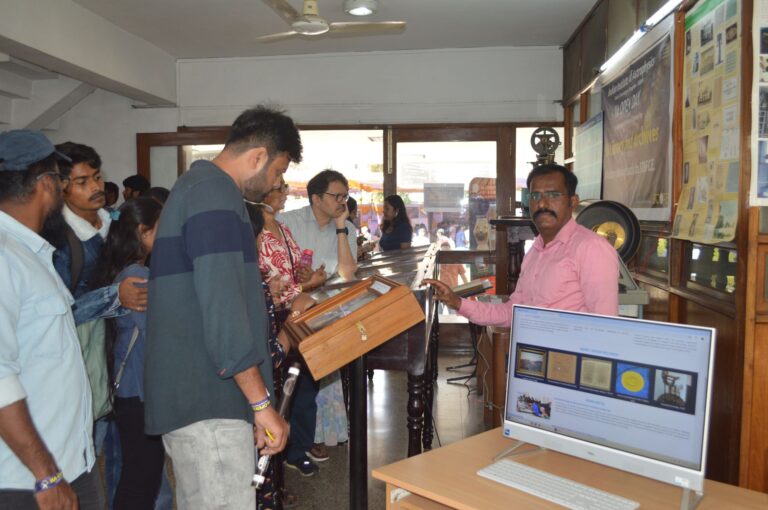
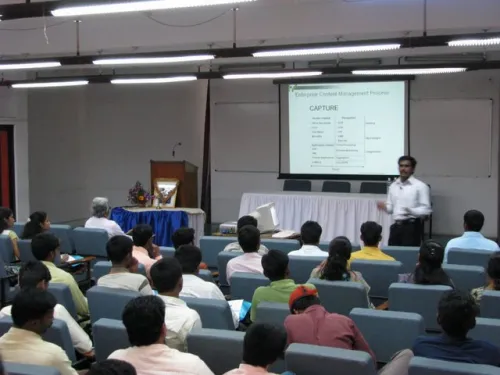
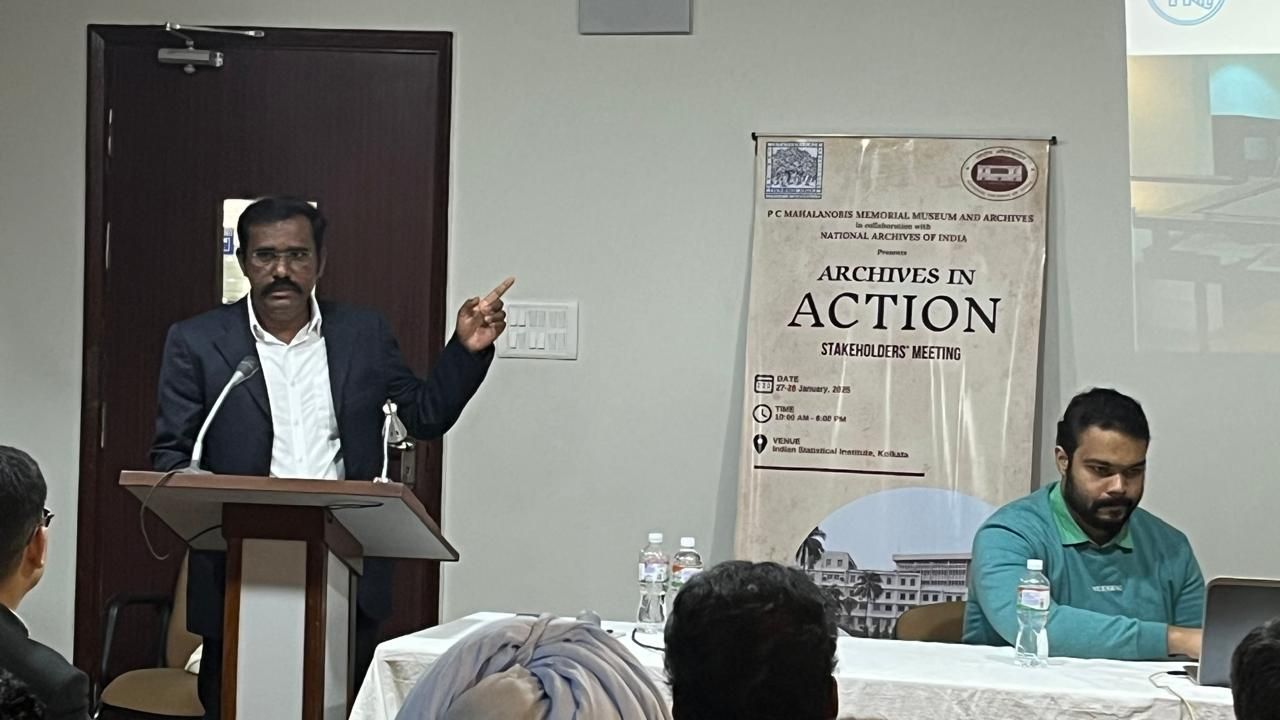
It was truly an honor to be part of a gathering that stood as a testament to the power of collaboration and shared purpose within the archival community. Last week, I had the privilege of representing the Indian Institute of Astrophysics (IIA) and sharing our journey of implementing Archives Online Finding Aids using AtoM (Access to Memory) during the “Archives in Action” Stakeholders’ Meeting, held on January 27–28, 2025. The event, organized by PCMMM&A, ISI Kolkata, in collaboration with the National Archives of India, brought together an inspiring network of more than sixty archivists, scholars, and experts from fifteen states across the country.
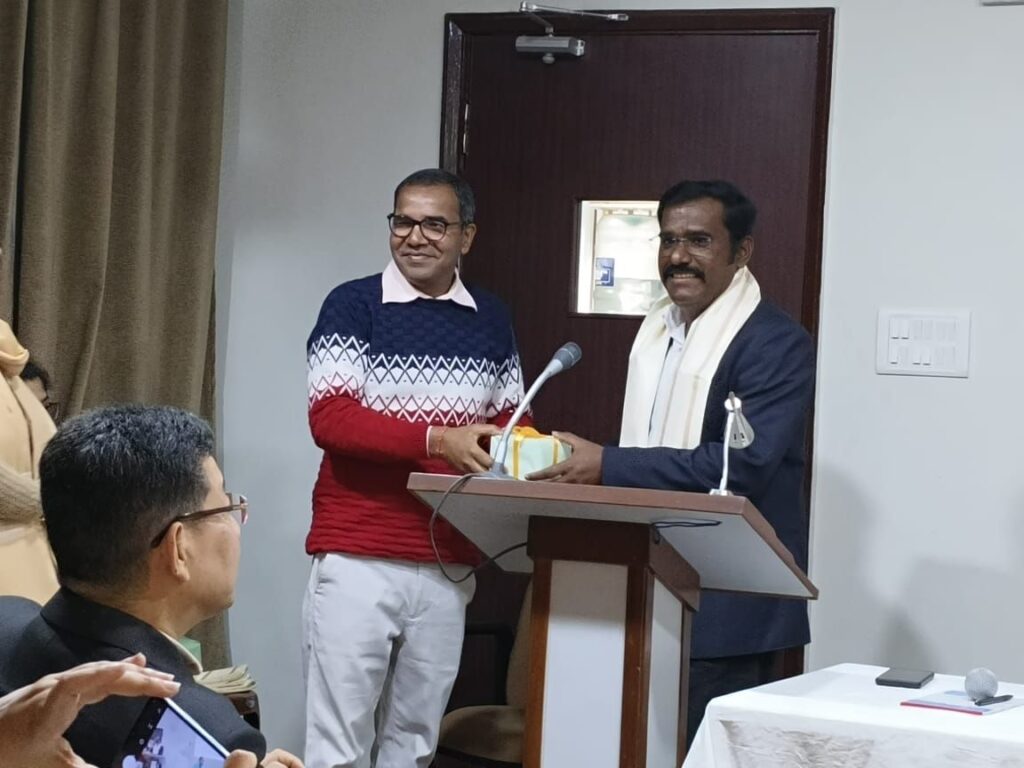
The two-day meeting was not merely a conference—it was a vibrant confluence of ideas, experiences, and aspirations. The energy in the room reflected the shared commitment of India’s archival community toward strengthening digital preservation, ensuring long-term access, and building sustainable models for managing the nation’s documentary heritage. From discussions on metadata standards to debates on user engagement and the ethics of digital access, every session resonated with the collective vision of transforming archives into living, dynamic spaces for discovery and learning.
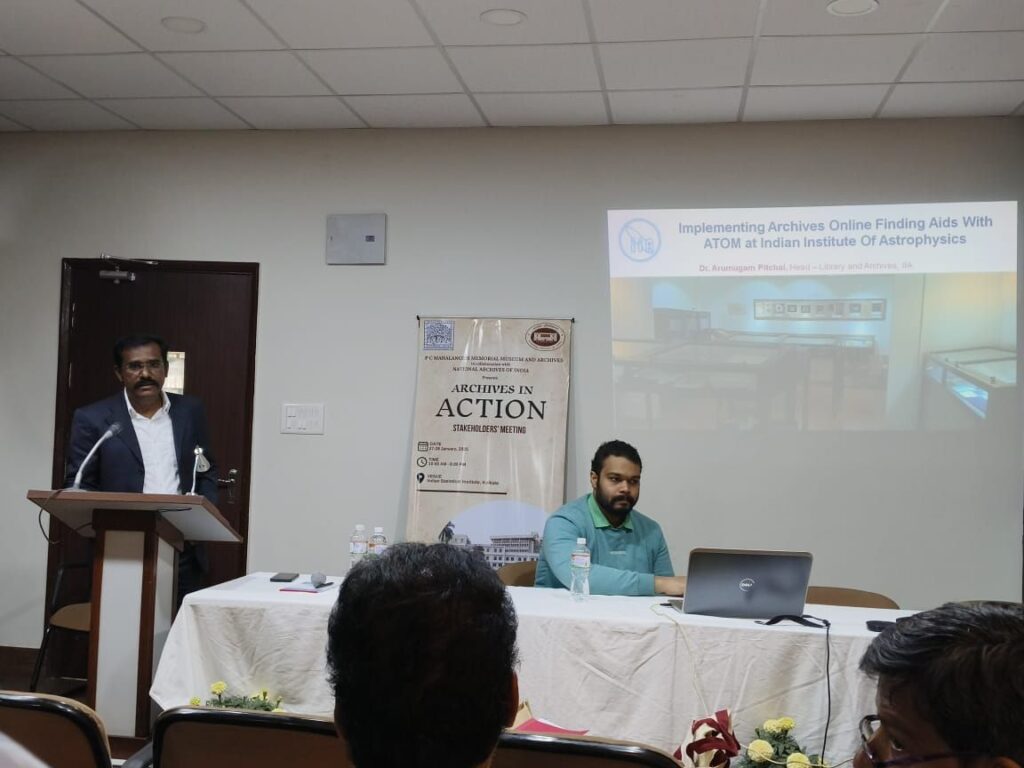
Being part of this forum offered a unique opportunity to both share and learn. My presentation focused on the IIA Archives’ initiative to develop online finding aids using AtoM, an open-source archival management software that adheres to international metadata standards. This project, which has been a significant part of our digital preservation strategy, aims to make archival collections more accessible to researchers, historians, and the general public. Implementing AtoM was not just about adopting new software—it represented a shift in how we perceive archives, metadata, and the user experience.
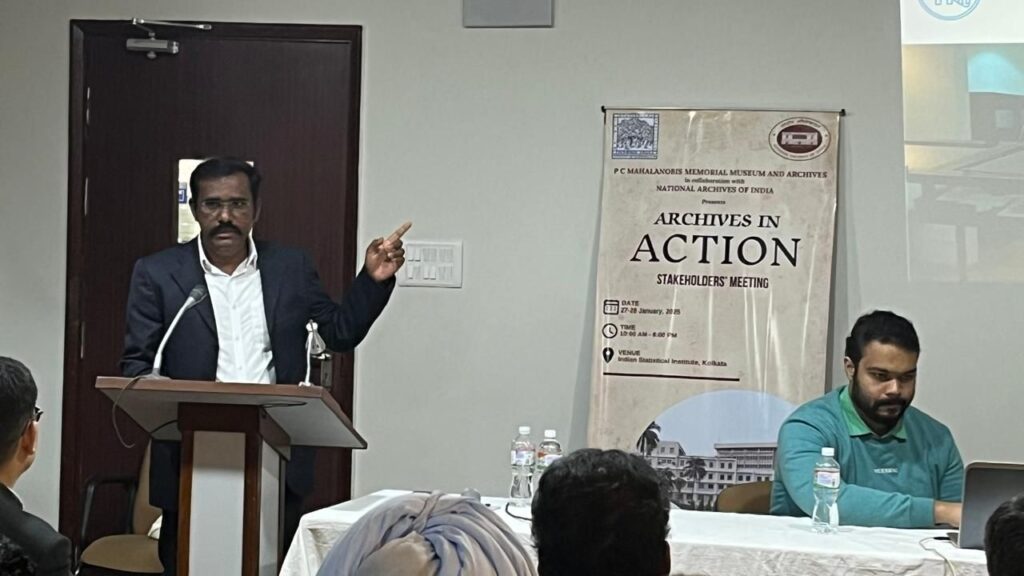
In sharing our experience, I reflected on the process of designing and structuring metadata to align with international standards such as DACS (Describing Archives: A Content Standard) and EAD (Encoded Archival Description). These standards ensure consistency, interoperability, and the ability to connect with broader archival networks globally. The most valuable insight we gained through this journey was that digitization should begin long before a scanner is turned on—it starts with well-organized, accurate metadata. Preparing metadata in advance not only improves searchability but also ensures that digital collections remain relevant and discoverable for years to come.
As I listened to the presentations and engaged in discussions, what stood out was the shared determination to bridge the gap between traditional archival practice and emerging digital realities. Every participant brought unique perspectives—from institutional challenges to innovative solutions. It was inspiring to witness archivists from diverse backgrounds discussing ways to adopt open-source platforms such as AtoM and ArchivesSpace, leveraging tools that support OAI-PMH (Open Archives Initiative Protocol for Metadata Harvesting) to facilitate seamless data exchange and collaboration across institutions.
One of the recurring themes throughout the meeting was sustainability—how to ensure that the digital systems we build today can endure technological change tomorrow. The conversations delved into the importance of digital asset management, regular maintenance, and the creation of institutional policies that safeguard long-term preservation. Equally emphasized was the user experience, recognizing that archives, while rooted in preservation, must also invite exploration. Developing intuitive and user-friendly interfaces, offering advanced search capabilities, and ensuring accessibility across platforms are now seen as essential dimensions of archival practice.
These discussions reaffirmed my belief that digitization is not simply a technical exercise—it is a strategic and ethical commitment to the preservation of collective memory. Building sustainable archives requires a thoughtful balance between innovation and tradition, openness and authenticity, and access and stewardship.
I am deeply grateful to Dr. Kishor Satpathy (ISI Kolkata) and Shri Arun Singhal, IAS, Director General – National Archives of India, for their exceptional leadership in conceptualizing and hosting this meaningful initiative. Their unwavering commitment to strengthening archival infrastructure and advancing discussions on digital access strategies has created a significant impact within the archival community. The “Archives in Action” meeting not only provided a space for dialogue but also reaffirmed the national effort to integrate technology with heritage preservation in thoughtful and inclusive ways.
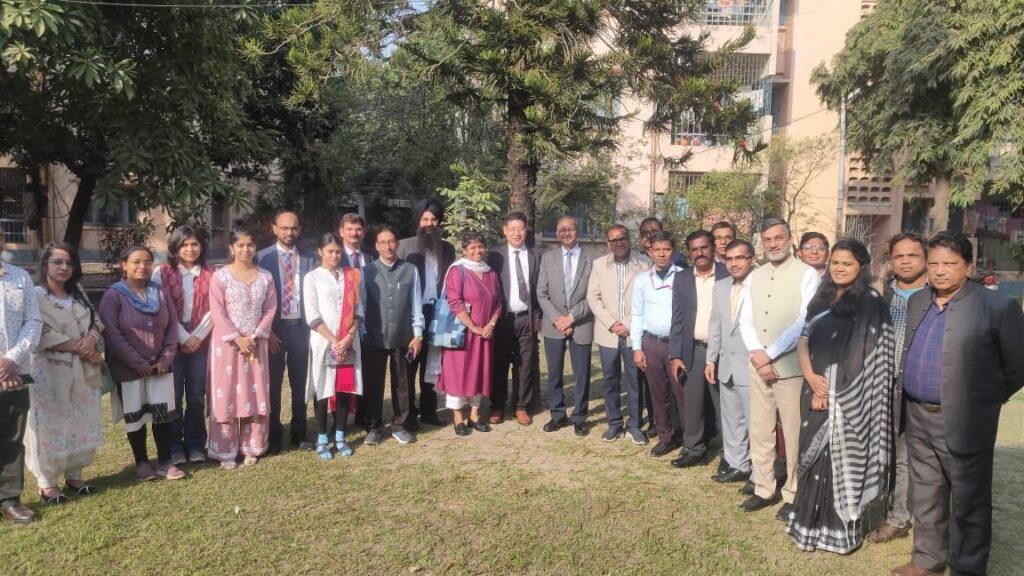
As the meeting concluded, I was left with a renewed sense of purpose. The exchanges of ideas, the shared challenges, and the emerging collaborations all pointed toward a unified goal—to make archives more open, resilient, and meaningful in a rapidly evolving digital world. The experience reminded me that archives are not static repositories of the past—they are dynamic spaces that connect history with the present and inspire the curiosity of the future.
Moving forward, I look forward to continued collaboration and knowledge-sharing within this dedicated community. Together, we can shape the future of archival practice in India—one that harmonizes tradition and technology, ensuring that our cultural and scientific heritage remains accessible, authentic, and alive for generations to come.