Beyond Telescopes: Libraries, Archives, and the Invisible Backbone of Astronomy
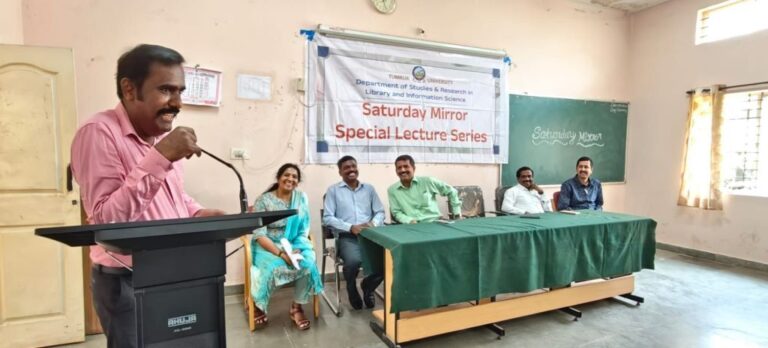
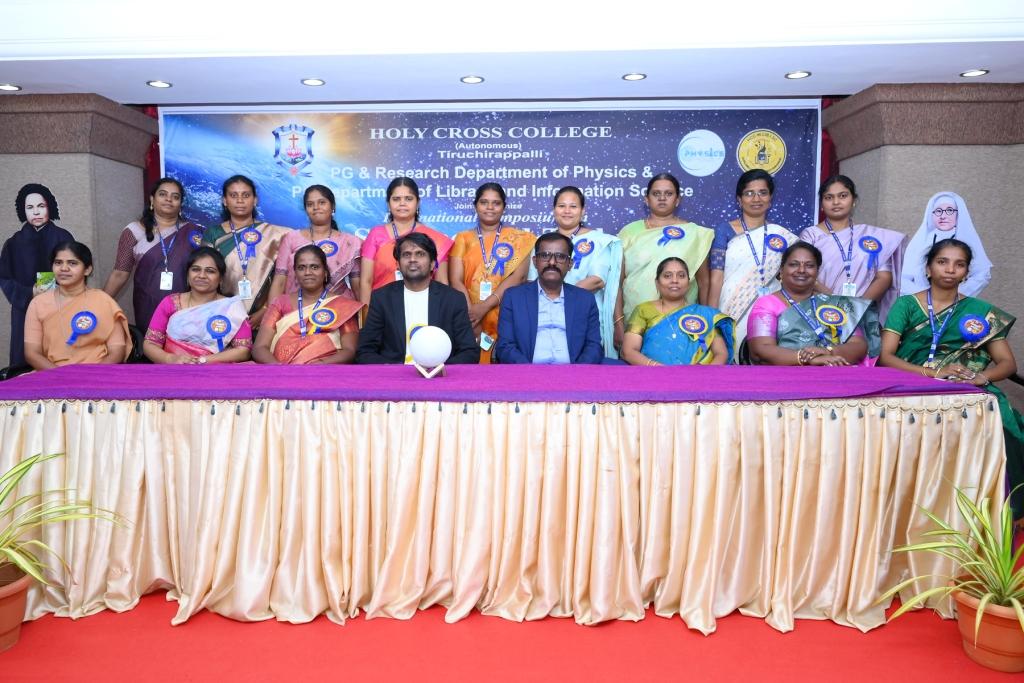
I was truly honoured to participate as a Resource Person for Technical Session IV, titled “Beyond Telescopes: Libraries and Archives in Advancing Astronomical Research,” at the International Symposium on Space Science and Technology, held on 30 January 2026 at Holy Cross College (Autonomous).
Looking Beyond the Instrument
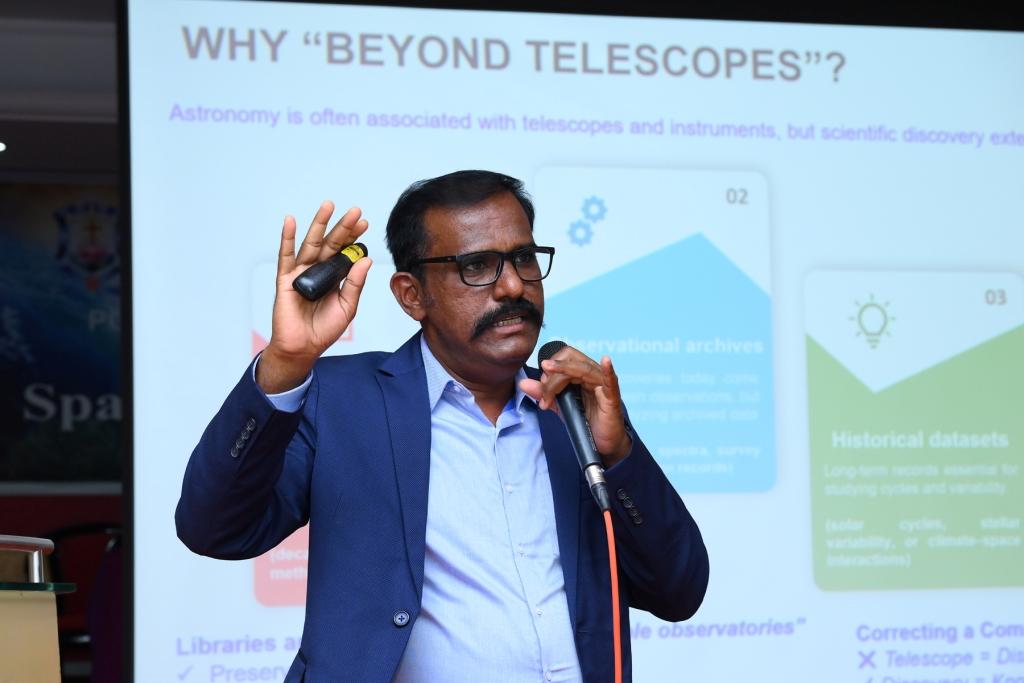
When we think of astronomy, we often imagine powerful telescopes, observatories perched on mountaintops, and cutting-edge instruments scanning the skies. But behind every major discovery lies an invisible yet powerful foundation — libraries and archives.
My session focused on how libraries and archives:
- Preserve invaluable scientific heritage
- Curate and manage research data systematically
- Enable long-term scholarly access
- Support interdisciplinary knowledge integration
- Sustain research continuity across generations
Astronomy does not advance through observation alone. It advances through memory, documentation, metadata, preservation, and access. In many ways, archives are the extended memory of science.
A Truly Interdisciplinary Exchange
One of the most rewarding aspects of INSyST 2026 was the vibrant interdisciplinary participation. The audience included scientists, academicians, and students from physics, computer science, and library and information science.
The questions raised during the session reflected deep curiosity:
- How do archives shape future astronomical discoveries?
- What is the role of digital preservation in big data astronomy?
- Can libraries actively participate in research workflows rather than remain passive repositories?
The discussions that followed were thoughtful, engaging, and forward-looking. It was encouraging to see such strong interest in positioning libraries and archives not at the periphery, but at the very core of scientific progress.
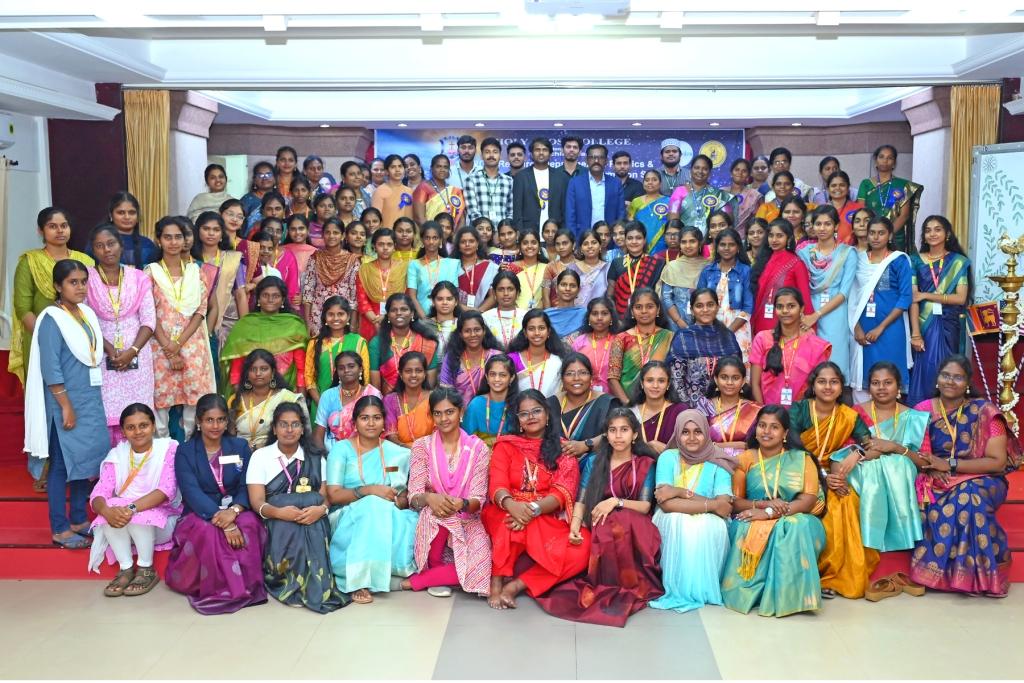
Gratitude and Appreciation
I extend my sincere thanks to the PG & Research Department of Physics and the PG Department of Library and Information Science at Holy Cross College (Autonomous) for the invitation and the excellent organisation of the symposium.